
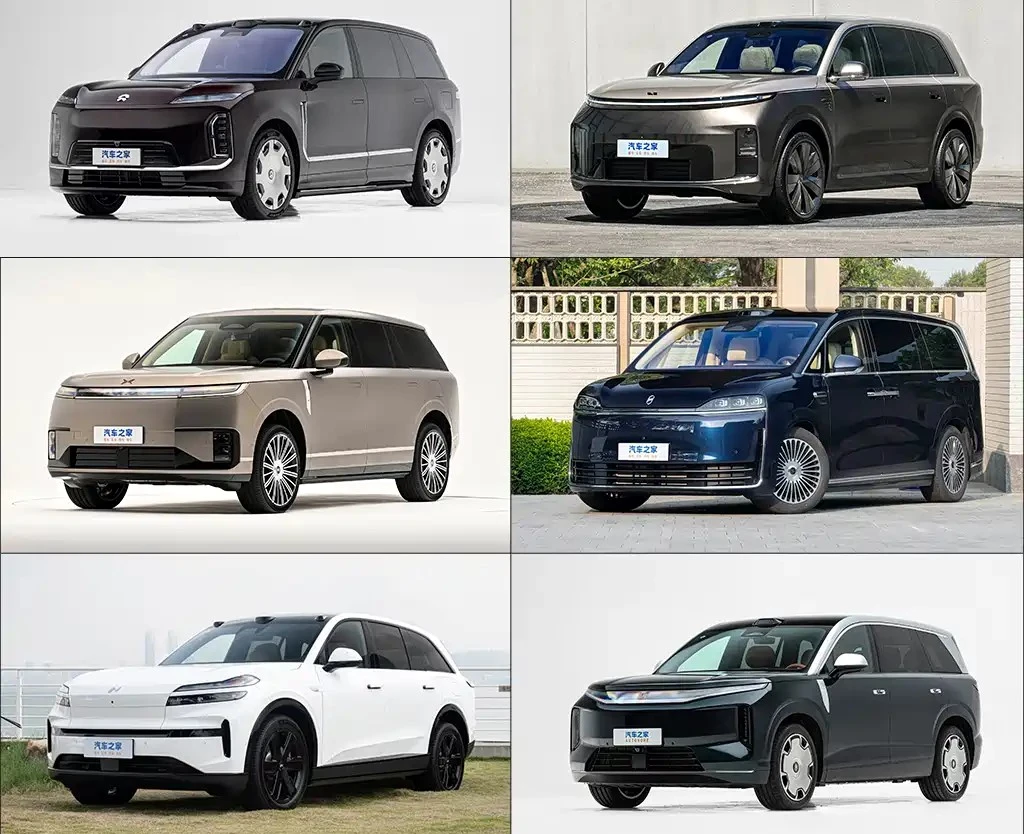
China’s May 2026 SUV Launch Wave: Onvo L80, Li Auto L9, Nio ES9, Xpeng GX, BYD Datang and More. Review of Chinese top SUVs 2026.
China’s new-car market is preparing for a very busy May. While the 2026 Beijing Auto Show brought plenty of debuts and concept reveals, many automakers deliberately held back their most important launch events. Instead of squeezing flagship models into a crowded motor show schedule, brands are now choosing dedicated product events where they can explain technology, pricing, intelligent driving systems and positioning in greater detail.
That strategy means May 2026 could become one of the most important months of the year for China’s high-end family SUV segment. A wave of so-called “8-series” and “9-series” flagship SUVs is set to arrive, covering everything from more affordable large electric SUVs to ultra-premium technology showcases.
Here are the key new models expected to launch in China in May 2026.
Onvo L80
Launch date: May 15
Pre-sale price: from 245,800 yuan, about $33,900
BaaS battery-rental price: from 159,800 yuan, about $22,000
Segment: five-seat large electric SUV


The Onvo L80 is one of the most important new models from Nio’s family-focused sub-brand. The SUV opened for pre-orders on April 28, with whole-vehicle pricing starting at 245,800 yuan, or roughly $33,900. With Nio’s BaaS battery rental plan, the entry price drops to 159,800 yuan, or about $22,000. The 85 kWh battery rental fee is reported at 899 yuan per month, around $124.
Positioned as a large five-seat SUV, the L80 is closely related to the Onvo L90 and uses a 900V electrical architecture. It measures 5,145 mm long with a 3,110 mm wheelbase, giving it the footprint of a flagship SUV while keeping a practical 2+3 five-seat layout.
Storage is a major selling point. The L80 offers:
- 240-liter front trunk
- 1,200-liter rear cargo area
- Up to 2,600 liters with the second row folded
- 2.2-meter flat cargo depth
- 63-liter + 106-liter dual underfloor rear storage compartments
- 53 storage spaces throughout the cabin
This is clearly a family SUV designed around real-world use: road trips, camping, luggage, children’s gear and long-distance comfort.


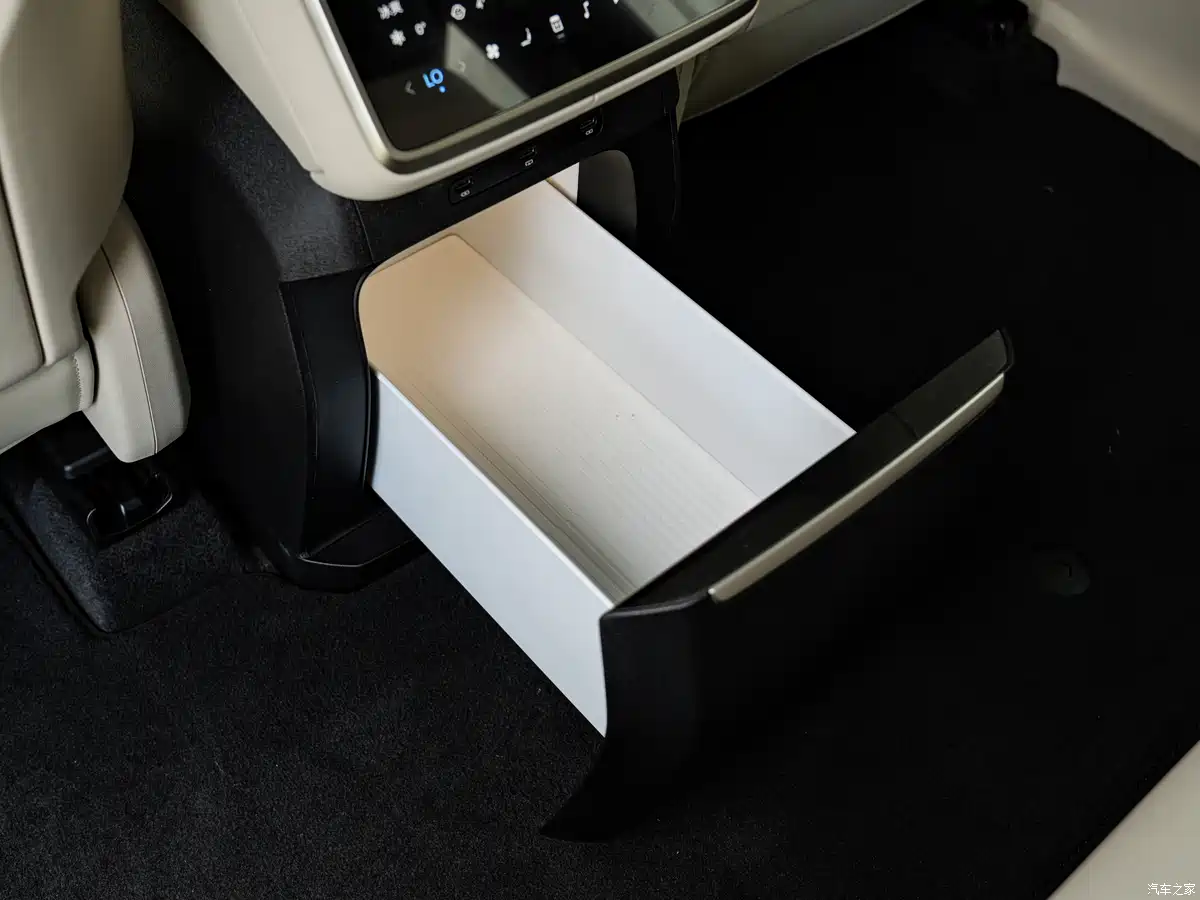
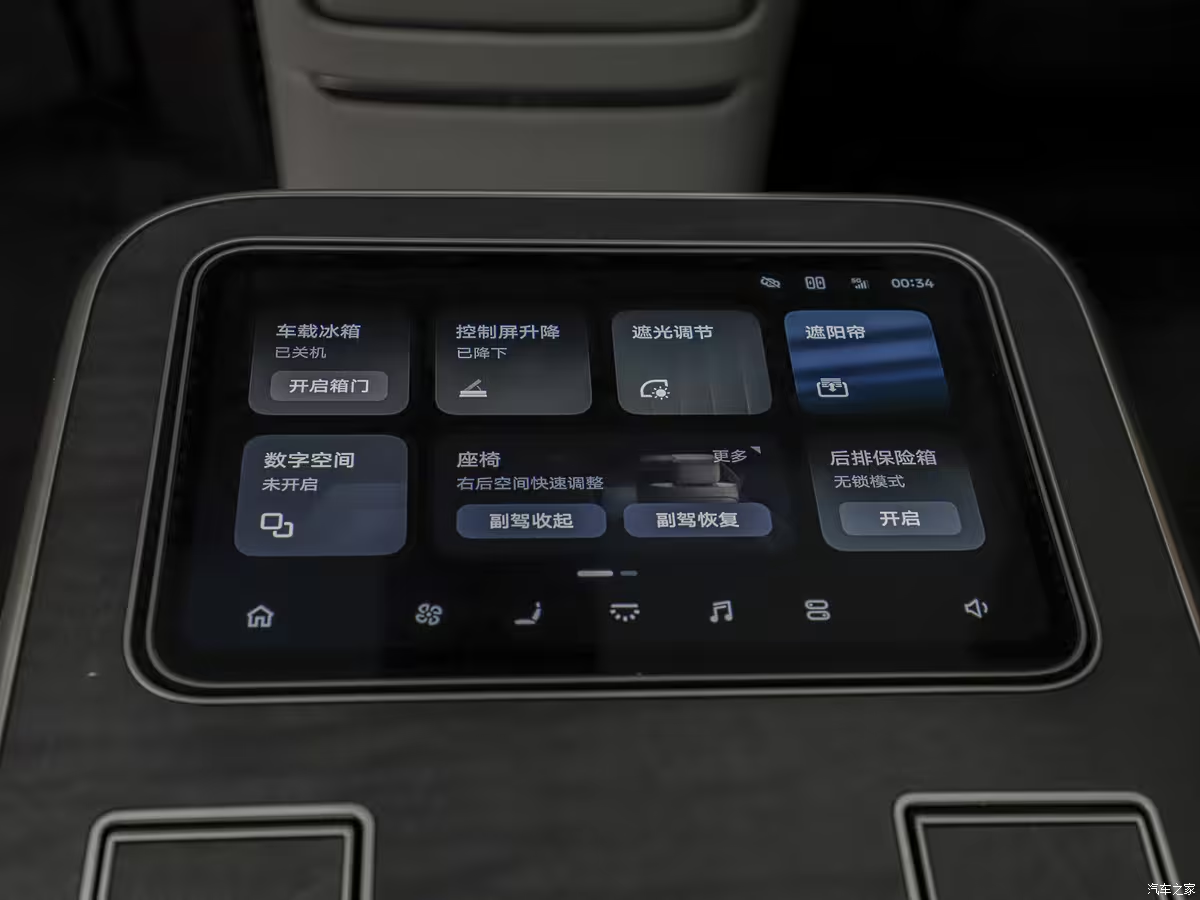
Inside, the L80 is fitted with a 35-inch AR-HUD, a 17.2-inch front center screen, an 8-inch rear control screen and a 17.3-inch ceiling-mounted entertainment display. Other features include heated steering wheel, heated and ventilated seats, 8-point seat massage, 16-million-color ambient lighting, an 8.8-liter electric refrigerator and a 23-speaker Onvo premium audio system with 2,048W output and Dolby Atmos support.
The L80 will be offered with two intelligent driving configurations. The LiDAR version uses Nio’s Shenji NX9031 assisted-driving chip and the Nio World Model system, while the vision-only version uses an Nvidia Orin X chip. The model also comes with nine airbags as standard.
You will be interested to read about Xiaomi’s new SKYNOMAD “Kunlun” Range-Extender SUV

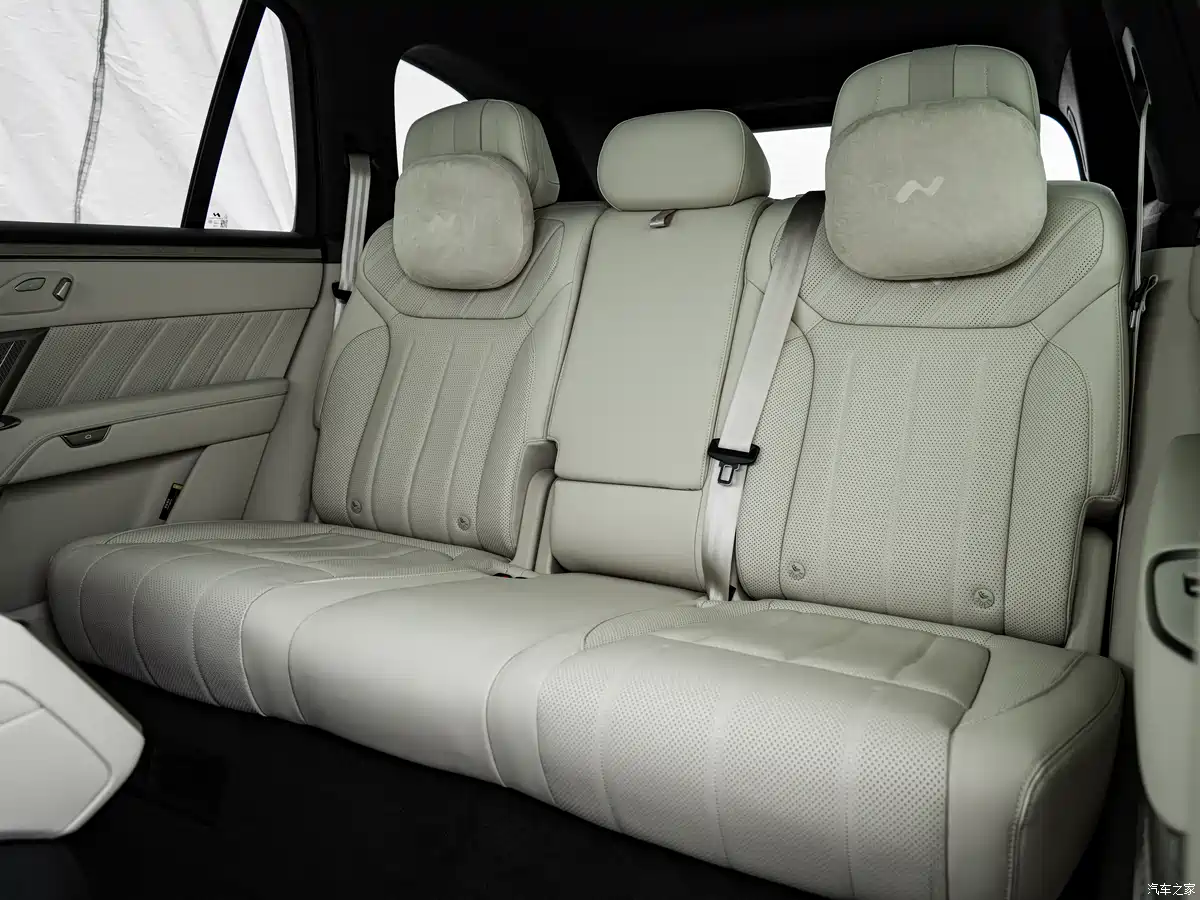
Power comes from a pure-electric system with both rear-wheel-drive and all-wheel-drive versions. The RWD model produces 340 kW, consumes a claimed 14.3 kWh/100 km, and accelerates from 0–100 km/h in 5.7 seconds. The AWD model produces 440 kW, consumes 15.4 kWh/100 km, and cuts the 0–100 km/h time to 4.5 seconds. Both versions use an 85 kWh battery pack, with CLTC range rated at 615 km for the RWD model and 570 km for the AWD version.
The Onvo L80 also supports V2L external power output, including 3.3 kW through an adapter and a 2.2 kW AC socket in the luggage area.

You can also read about Onvo L80
Why it matters
The Onvo L80 is designed to make large electric SUVs more accessible. Its BaaS pricing significantly lowers the entry barrier, while Nio’s battery-swapping network gives it a key advantage over many pure-electric rivals. It combines flagship-level platform technology, large cargo capacity and advanced intelligent driving hardware at a price point that directly targets mainstream family buyers.
New Li Auto L9
Launch date: May 15
Price of L9 Livis: 559,800 yuan, about $77,200
Segment: flagship six-seat extended-range SUV
The new Li Auto L9 Livis has already announced pricing at 559,800 yuan, or approximately $77,200. A regular version is also expected to follow.


The updated L9 remains true to Li Auto’s family SUV formula, but brings major improvements in computing power, perception hardware, suspension technology and electric range. The Livis version introduces a two-tone body, upgraded lighting, a new matrix headlight system and interactive light signatures.
Dimensions have increased slightly. The new L9 Livis measures:
- 5,255 mm long
- 2,000 mm wide
- 1,810 mm tall
- 3,125 mm wheelbase
The cabin keeps Li Auto’s familiar family-oriented layout but introduces a cleaner steering wheel design without the previous interactive steering display. The center display setup has also been upgraded from a joined dual-screen arrangement to a true integrated large screen. Second-row door panels gain electric door-opening switches while retaining mechanical handles for emergency use.


The biggest leap is in intelligent driving. The new L9 debuts Li Auto’s self-developed 5 nm M100 chip, with dual-chip computing power claimed at 2,560 TOPS. The Livis version is equipped with four LiDAR units for 360-degree perception, along with an 8-megapixel camera array. The vehicle supports full-scenario NOA across highways, urban ring roads and city streets, as well as memory parking, remote parking and straight-line summon.

The extended-range powertrain is also upgraded. The new L9 uses Li Auto’s third-generation 1.5T range extender, with WLTC fuel consumption reduced to 6.3 L/100 km. Its battery capacity exceeds 70 kWh, giving the SUV a claimed 420 km CLTC pure-electric range and more than 1,500 km CLTC combined range. A 5C fast-charging battery option is also available.


The chassis receives one of the most ambitious upgrades in the segment: an 800V fully independent active suspension system, drive-by-wire steering, four-wheel steering and electro-mechanical braking. The large SUV’s turning radius is reduced to 5.4 meters, improving maneuverability in cities and parking areas.
You can also read about Onvo L90
Why it matters
Li Auto built its reputation on the “refrigerator, TV and sofa” family-SUV formula, but rivals have caught up quickly. The new L9 is Li Auto’s answer: more technology, more intelligence, longer electric range and a more advanced chassis. It is no longer just about comfort—it is a push toward a higher technology ceiling.
Nio ES9
Launch date: late May
Pre-sale price: 528,000–658,000 yuan, about $72,800–$90,700
BaaS price: 420,000–550,000 yuan, about $57,900–$75,800
Segment: flagship large electric SUV
The Nio ES9 is positioned as Nio’s new flagship SUV. It has opened for pre-orders with a price range of 528,000–658,000 yuan, equal to about $72,800–$90,700. With battery rental, the pre-sale range drops to 420,000–550,000 yuan, or around $57,900–$75,800.


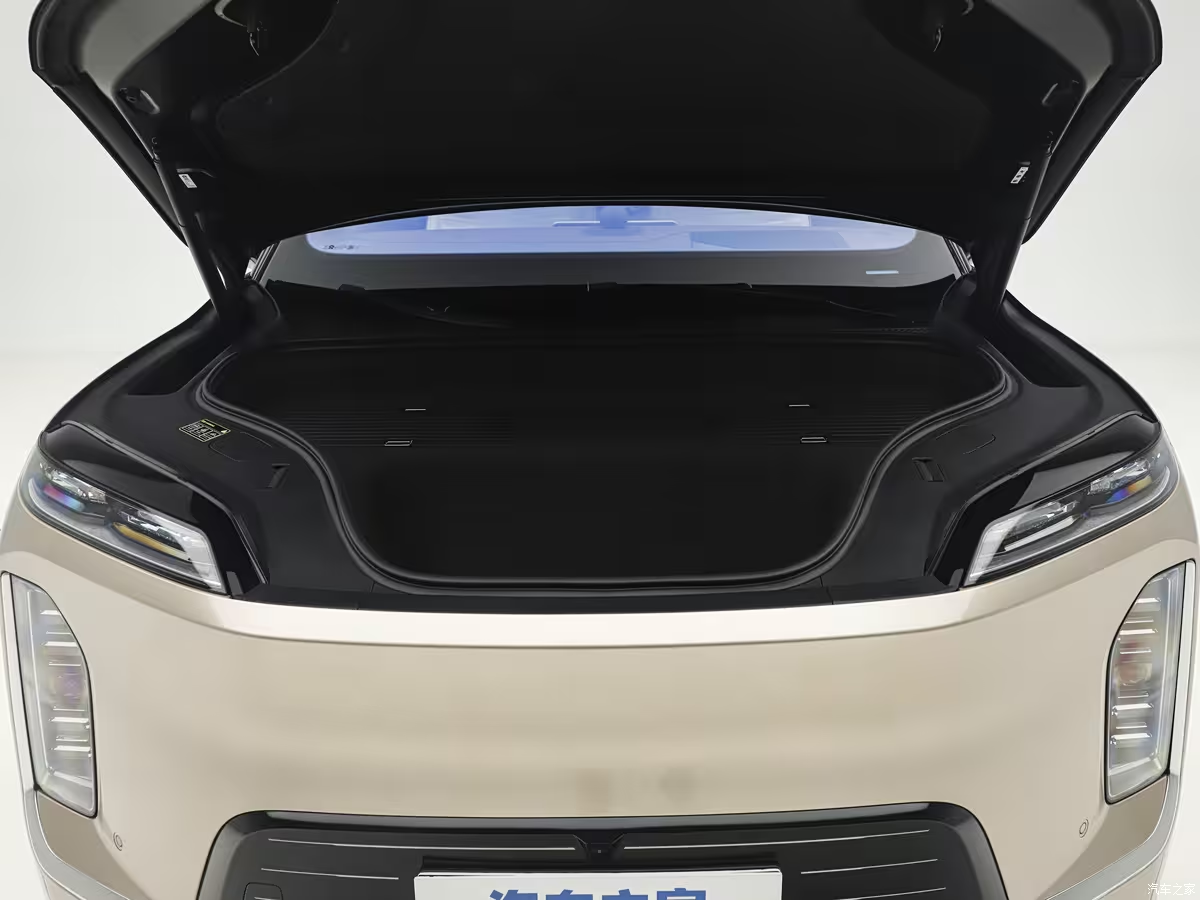
The ES9 adopts Nio’s latest Shark Nose front design and features a hidden 216-liter front trunk. The frunk supports multiple opening methods, including gesture control via future OTA update, voice control, logo press, foot kick and more. The air suspension can also lower automatically when the compartment opens.
The SUV measures:
- 5,365 mm long
- 2,029 mm wide
- 1,870 mm tall
- 3,250 mm wheelbase
It offers seven exterior colors and a six-seat 2+2+2 layout. The rear cargo area is rated at 600 liters, including a 123-liter underfloor compartment. With the third row folded, capacity expands to 1,586 liters.


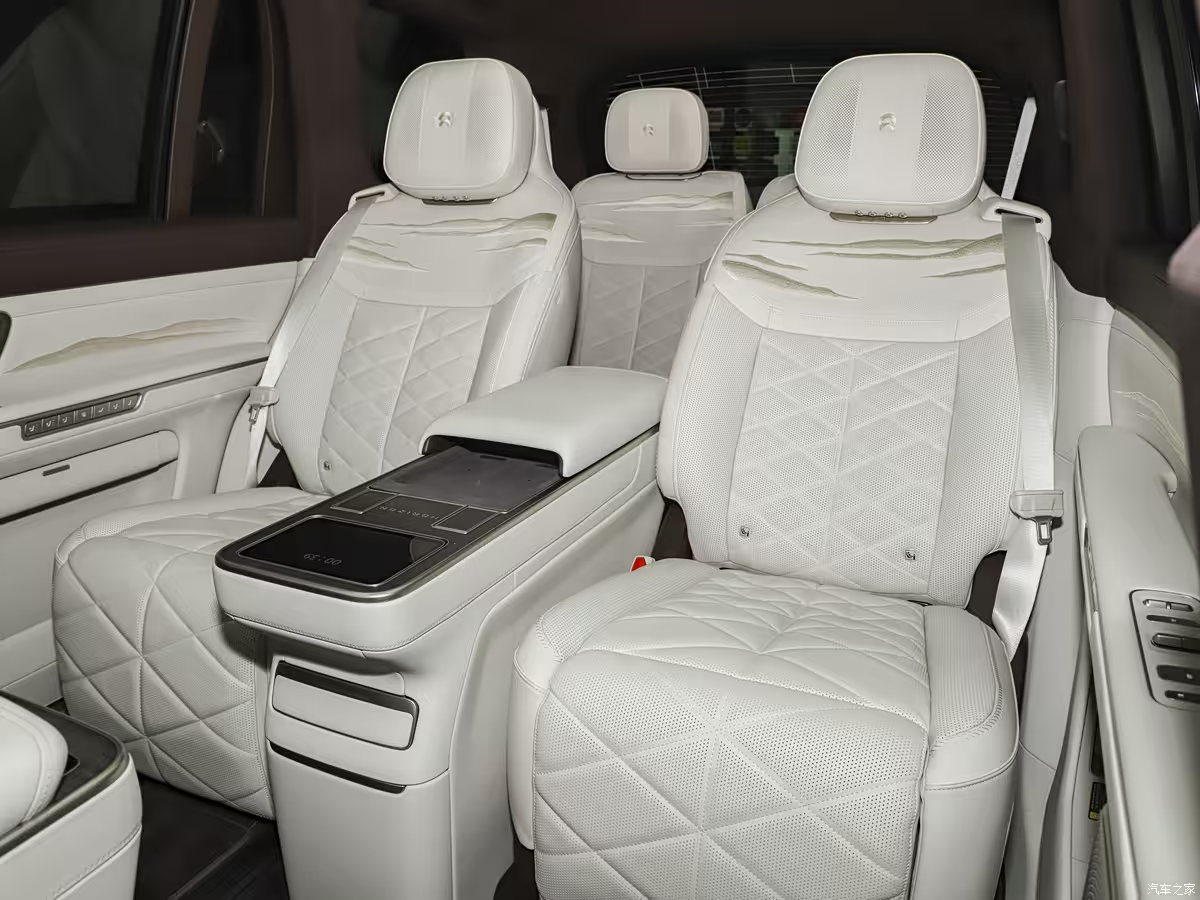
The cabin uses Nappa leather, real wood and soft-touch materials throughout. The special Horizon edition adds embroidered detailing, aluminum-inlaid wood trim and gemstone elements. Up front, the ES9 carries over ideas from the Nio ET9, including a 15.6-inch AMOLED center screen, a 48-inch Skyline display, SkyOS and NOMI Mate 3.0.
Second-row seats support 26-way adjustment, lateral sliding and extensive heating coverage. Massage functions, a rear control screen, optional tea table, comfort package, rear cargo accessories and lifestyle equipment are also available. The ES9 also features a 47-speaker 9.2.4.8 sound system with 3,020W output.

For intelligent driving, the ES9 uses 31 perception sensors, including roof LiDAR, side wide-angle LiDAR units and front 4D imaging radar. It is powered by Nio’s 5 nm Shenji NX9031 chip and the Nio World Model. The SUV supports NOP+ assisted driving, including navigation to battery-swap stations.

The powertrain uses a 900V architecture with a 180 kW front motor and 340 kW rear motor, producing 520 kW and 700 Nm combined. The 0–100 km/h time is 4.3 seconds. A 102 kWh battery provides up to 620 km CLTC range.

The ES9 also features Nio’s advanced intelligent chassis, including steer-by-wire, variable steering ratio, active hydraulic suspension, rear-wheel steering up to 8.4 degrees, a 5.4-meter turning radius and vehicle motion control capable of stabilizing the car after a tire blowout.
More about NIO ES9
Why it matters
Nio already has premium SUVs, but the ES9 is intended to sit at the very top of the brand’s SUV range. It is a halo product packed with Nio’s latest electric, digital, chassis and cabin technologies. Its role is not only to sell volume, but also to reinforce Nio’s premium image.
Xpeng GX
Launch date: expected in May
Pre-sale price: 399,800 yuan, about $55,100
Segment: large SUV, available as EV and EREV
The Xpeng GX has opened for pre-orders at 399,800 yuan, or approximately $55,100. It will be offered with both pure-electric and extended-range powertrains, targeting buyers who want space, luxury and advanced intelligent driving in one package.


The GX uses Xpeng’s latest design language, with a closed front fascia, star-ring light bar and AI digital projection headlights. A 24K gold badge adds a more premium visual touch. The pure-electric version also receives a front trunk.
Dimensions are generous:
- 5,265 mm long
- 1,999 mm wide
- 1,800 mm tall
- 3,115 mm wheelbase
Inside, the GX uses a wraparound cabin layout, a two-spoke multi-function steer-by-wire steering wheel, a 17.3-inch 3K floating center screen and an 88-inch AR-HUD. A floating center island includes a smart lifting charging panel and hidden cupholders. The audio system uses 33 speakers and supports 7.1.6.8 immersive sound.


The second row features a flip-down entertainment screen, small table, magnetic docking interface and comfort-oriented seating. Front seats offer 16-point massage, 16-way power adjustment, ventilation, heating and leg-rest heating. The passenger side can be equipped with a Nappa leather zero-gravity seat. The second-row right seat is also a zero-gravity seat, while the left seat is a premium aviation-style comfort seat.


The third row can recline flat and fold electrically, expanding maximum cargo space to 1,748 liters.

Powertrain options include an extended-range model with a 1.5T range extender and dual motors rated at 160 kW front and 210 kW rear. Its maximum CLTC pure-electric range is 430 km, while combined CLTC range reaches 1,585 km. The pure-electric model also uses dual motors, with 160 kW front and 270 kW rear output, and a maximum range of 750 km.
Other key features include full steer-by-wire, four-wheel steering, AI intelligent air suspension, second-generation VLA highway assisted driving and up to 3,000 TOPS of computing power.
Why it matters
The GX is a major step for Xpeng’s premium ambitions. It combines the company’s strengths in software and assisted driving with a more luxurious full-size family SUV format. Competitive pricing will be crucial, as this segment is becoming extremely crowded.
BYD Datang
Launch date: late May
EV pre-sale price: 250,000–320,000 yuan, about $34,500–$44,100
Segment: flagship seven-seat SUV
The BYD Datang EV has opened for pre-orders with a price range of 250,000–320,000 yuan, or approximately $34,500–$44,100. Plug-in hybrid versions will also be offered. Positioned above the existing Tang L, the Datang is a new flagship SUV under BYD’s Dynasty family.


The Datang measures:
- 5,263 mm long
- 1,999 mm wide
- 1,790 mm tall
- 3,130 mm wheelbase
It features BYD’s latest design language, combining traditional Chinese styling cues with modern EV proportions. Exterior color options include black, gray, beige, red and green, along with several two-tone combinations. A 252-liter electric front trunk further improves storage practicality.
Inside, the Datang emphasizes a mix of luxury and family warmth. It features wood-texture trim inspired by traditional Chinese architecture, a new steering wheel, a digital instrument display, a floating center screen and a passenger entertainment screen. A head-up display and 27-speaker Devialet audio system are also included.


The Datang uses a 2+2+3 seven-seat layout. The second row includes dual zero-pressure independent seats with integrated leg rests, one-touch reclining, a folding screen, tray tables and a refrigerator. The third row supports electric adjustment and heating, making it more usable than typical seven-seat SUV third rows.


Powertrain choices include DM-i, DM-p and pure-electric versions. The DM-i model uses a 1.5T engine and a single electric motor rated at 300 kW, while the DM-p version uses dual motors with a combined output of 400 kW and a 0–100 km/h time of 4.3 seconds. EV versions offer 800 km, 950 km RWD and 850 km AWD range options. The AWD EV accelerates from 0–100 km/h in 3.9 seconds.

Technology highlights include rear-wheel steering, BYD flash charging, DiSus-A suspension with dual-chamber air springs and road preview, plus God’s Eye 5.0 intelligent driving.
More about BYD Datang
Why it matters
The Datang pushes BYD’s Dynasty series deeper into the premium flagship SUV space. With long range, seven-seat practicality, fast charging and advanced chassis technology, it could become one of BYD’s most important high-end family SUVs.
Luxeed V9
Launch date: May
Pre-sale price: 399,800–529,800 yuan, about $55,100–$73,000
Segment: high-end MPV
The Luxeed V9 has opened for pre-orders at 399,800–529,800 yuan, or about $55,100–$73,000. Although not an SUV, it is one of the most important premium family vehicles launching in China in May.


The V9 is positioned as a high-end MPV powered by Huawei’s intelligent vehicle technologies. Its highlights include 896-line LiDAR, 800V fast charging, rear-wheel steering, dual-chamber air suspension and a luxury full-scenario cabin.
The vehicle measures:
- 5,359 mm long
- 2,009 mm wide
- 1,879 mm tall
- 3,250 mm wheelbase
It uses a 2+2+3 seven-seat layout and features DLP projection headlights, ground projection functions, welcome light carpet and Huawei-backed assisted driving hardware. Interior options include purple, beige and orange themes, with natural wood, Nappa leather and crystal-effect detailing.


The cabin uses HarmonyOS 4.0, with a 10.25-inch digital instrument panel, 15.6-inch center screen, 21-inch passenger entertainment display, ceiling screen and Huawei Sound audio system.


The second row is a core highlight. Seats can rotate for 45-degree welcome mode, 90-degree viewing mode or 180-degree face-to-face seating. They also offer dual zero-gravity functionality and extended leg support.


The V9 uses Huawei Qiankun ADS 4.1, supporting highway NOA, urban NOA, parking-space-to-parking-space assisted driving, cross-floor autonomous parking and valet parking functions. It supports 160 parking scenarios.

Powertrain choices include extended-range and pure-electric versions. The EREV version uses Huawei’s range-extender system, with CLTC combined range of more than 1,250 km. The EV version uses Huawei DriveONE 800V silicon-carbide platform, with fast charging from 10% to 80% in 25 minutes and around 300 km of range added in 10 minutes.
More about Luxeed V9
Why it matters
The Luxeed V9 shows Huawei’s expanding influence in China’s premium vehicle market. It targets both business and family users, combining MPV space with high-end digital features, intelligent driving and luxury comfort.
Huajing S
Launch date: May 8
Segment: large plug-in hybrid SUV
The Huajing S is the first flagship model developed through deeper cooperation between Wuling and Huawei. The partnership covers intelligent manufacturing, assisted driving, smart cabin systems, connected services and future ecosystem integration.


Built on the Tianyu Architecture L platform, the Huajing S is a large three-row six-seat SUV using plug-in hybrid power. Key features include Huawei Qiankun ADS Pro Enhanced, HarmonyOS cockpit, Huawei cloud services and a pure-vision assisted-driving solution.
The vehicle measures:
- 5,235 mm long
- 1,999 mm wide
- 1,800 mm tall
- 3,105 mm wheelbase
It supports urban NCA, highway NCA, parking assistance and Huawei CAS 4.0 collision-avoidance technology. A future OTA update is expected to upgrade the vehicle to Huawei Qiankun ADS 5 Pro.


Inside, the Huajing S uses a wraparound cabin, dual 15.6-inch front and rear displays, HarmonyOS cockpit, Huawei StarFlash digital key, enhanced sentry mode, phone-based vehicle control, Infinity audio, rear tray tables and a three-row six-seat layout. A double-bed mode is also available.


There are 28 storage spaces, a 423-liter trunk, and up to 1,268 liters when the third row is folded.

Power comes from Wuling’s Lingxi 3.0 hybrid system, combining a 1.5T engine with a 10-in-1 electric motor system. The engine produces 105 kW, while total system output reaches 386 kW and 620 Nm. Battery options include 31 kWh and 41.9 kWh packs, with electric range ratings of 130 km, 160 km and 175 km depending on version. WLTC fuel consumption is 6.98 L/100 km for the AWD version and 6.18 L/100 km for the two-wheel-drive version.
Why it matters
The Huajing S may become one of the most affordable ways to access Huawei’s higher-end intelligent driving and smart cockpit ecosystem in a large SUV. It is also a major step for Wuling as the brand attempts to move further upmarket.
Denza N8L Flash-Charging Edition
Launch date: late May
Pre-sale price: 350,000–400,000 yuan, about $48,300–$55,100
Segment: six-seat large plug-in hybrid SUV
The Denza N8L Flash-Charging Edition has opened for pre-orders at 350,000–400,000 yuan, or around $48,300–$55,100. The model’s biggest upgrade is its second-generation Blade Battery and ultra-fast charging technology.
Denza claims the new N8L can “charge well” in 5 minutes and reach a full charge in 9 minutes, with only around three extra minutes required in extreme temperatures as low as -30°C. The CLTC pure-electric range is 430 km.


The exterior design remains largely unchanged from the current N8L. The SUV measures:
- 5,200 mm long
- 1,999 mm wide
- 1,820 mm tall
- 3,075 mm wheelbase
Inside, it keeps its multi-screen setup, including a 50-inch AR-HUD, 13.2-inch instrument screen, 17.3-inch center display, 13.2-inch passenger display, streaming rearview mirror and 17.3-inch rear entertainment screen. The voice system is connected to a DeepSeek large model and supports dialect recognition, in-car payments and smart shortcuts.


The six-seat 2+2+2 layout includes a driver’s seat with active side bolsters, a zero-gravity queen passenger seat and ventilation, heating and massage for the first and second rows.


The N8L Flash-Charging Edition uses Denza’s God’s Eye 5.0 assisted-driving system. Power comes from a 2.0T plug-in hybrid engine and EHS hybrid system. The engine produces 152 kW, while the three-motor setup delivers up to 560 kW, allowing 0–100 km/h acceleration in the three-second range.
It also features BYD’s e³ technology, tri-motor independent drive, rear dual-motor independent steering, vehicle motion control, CTB battery-body integration, compass turn, crab-walk mode and DiSus-A intelligent air body control system.
More about Denza N8L
Why it matters
The Denza N8L Flash-Charging Edition strengthens BYD’s advantage in battery and charging technology. It combines long electric range, ultra-fast charging, luxury comfort and sophisticated chassis systems in a large family SUV.
Volkswagen Passat ePro
Launch date: late May
Segment: plug-in hybrid sedan
The SAIC Volkswagen Passat ePro appeared at the 2026 Beijing Auto Show and is expected to launch in late May. It uses Volkswagen’s new-generation “Golden Hybrid” technology, combining an EA211 1.5T plug-in hybrid engine with P1+P3 dual motors.
The Passat ePro can use 92-octane gasoline and offers more than 1,400 km CLTC combined range. Its 22 kWh battery provides more than 150 km of CLTC pure-electric range.


The car measures:
- 5,017 mm long
- 1,850 mm wide
- 1,489 mm tall
- 2,871 mm wheelbase
The exterior features a modernized electrified look, including LED headlights, a full-width light strip, illuminated Volkswagen logo and a cleaner rear design with hidden exhaust outlets.

Inside, the Passat ePro uses a layered horizontal dashboard design, a 12.9-inch center screen, 10.3-inch digital instrument panel and passenger entertainment display.
Why it matters
Volkswagen is expanding aggressively in China’s new-energy market, and the Passat ePro gives traditional sedan buyers a familiar model with longer electric driving range and lower fuel consumption.
Market Outlook: May Could Redefine China’s Flagship Family SUV Segment
May 2026 is shaping up to be a defining month for China’s large SUV market. The new models fall into two clear groups.
The first group focuses on accessibility and value. Models such as the Onvo L80, BYD Datang and Huajing S aim to bring flagship space, advanced cabins and assisted driving to a broader audience.
The second group focuses on technology leadership. Nio ES9, Li Auto L9, Xpeng GX and Denza N8L are pushing higher with advanced chassis systems, ultra-fast charging, high-compute intelligent driving, premium cabins and sophisticated powertrains.
What is especially clear is that Chinese automakers are no longer competing only on price. They are competing on electric platforms, intelligent driving, comfort engineering, charging speed, energy efficiency and full-family usability. This new generation of Chinese flagship SUVs is more practical, more technologically ambitious and increasingly capable of challenging long-established foreign luxury brands.
For global buyers and industry observers, May 2026 will be an important snapshot of how fast China’s premium vehicle market is evolving.


